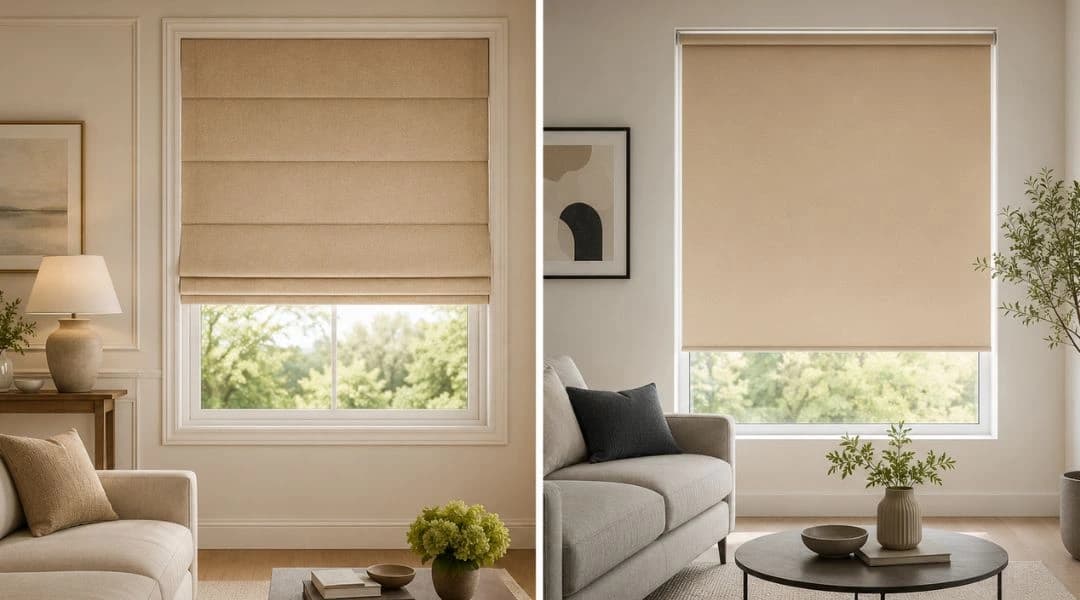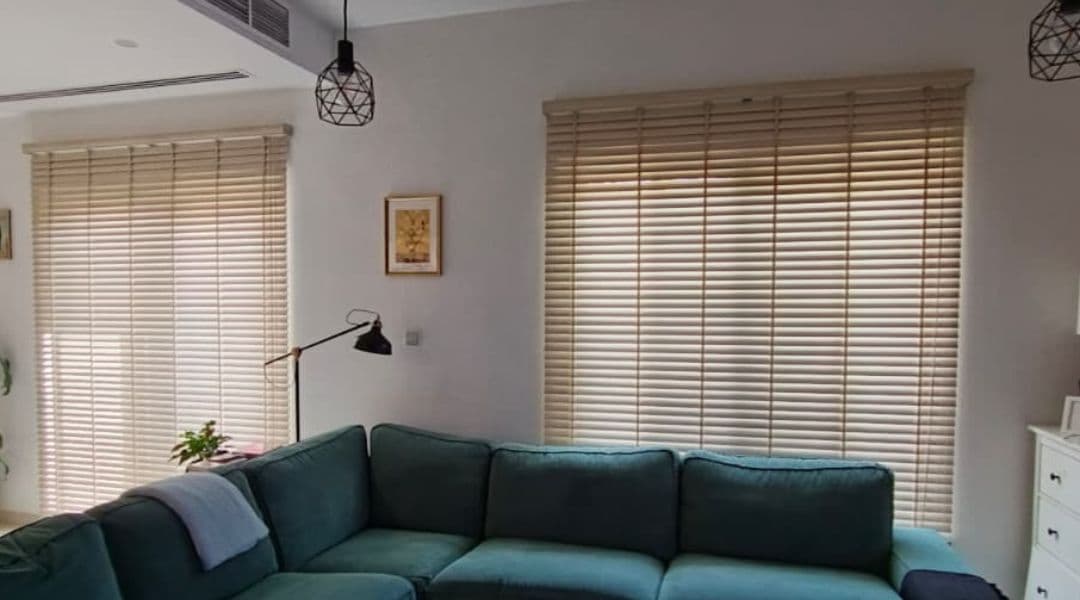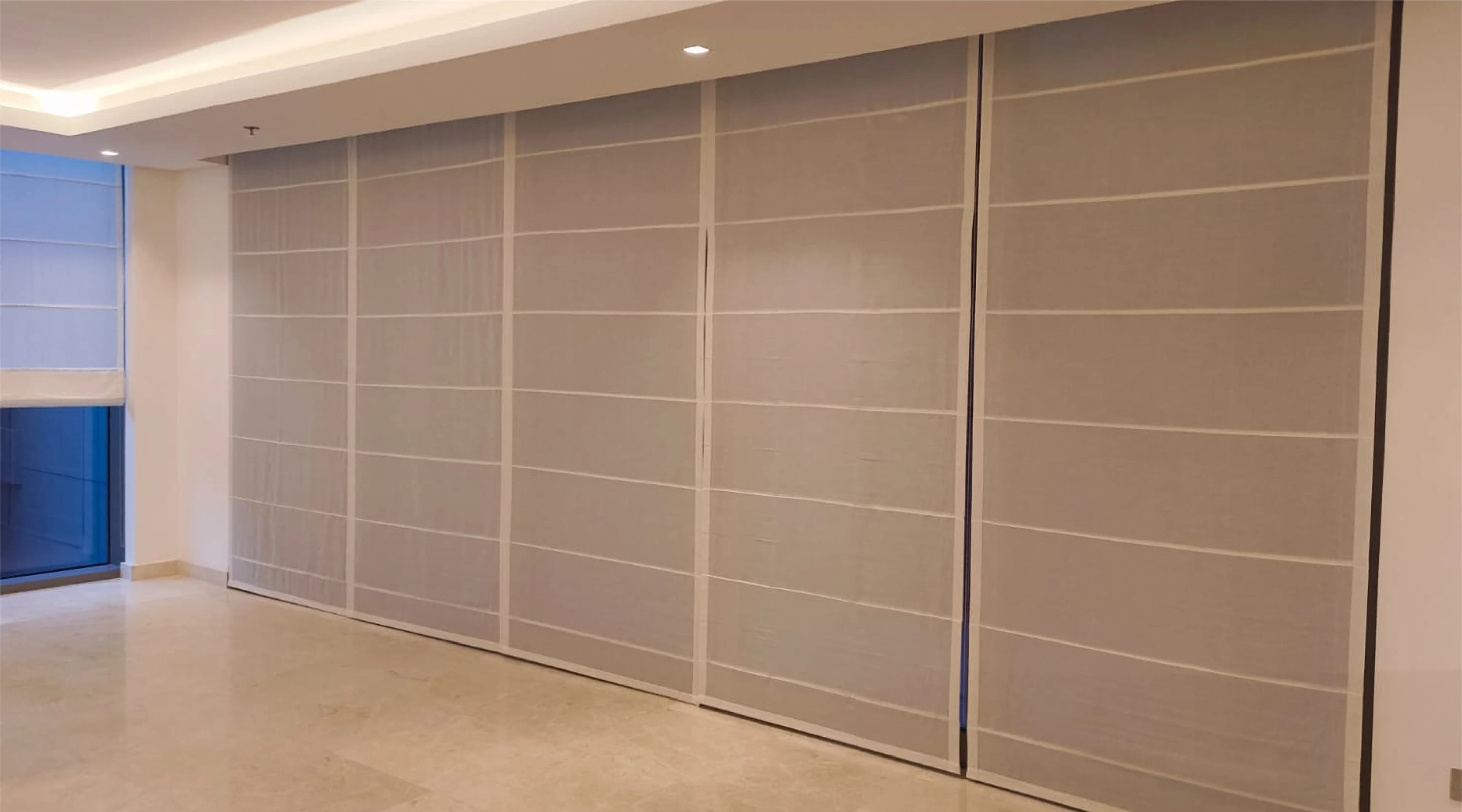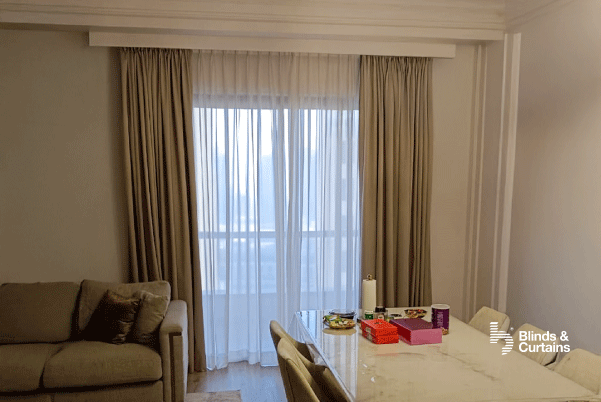
Drilling into window frames is not always an option.
Rented apartments in Dubai Marina, Business Bay, or JVC often come with restrictions on what you can fix to walls and frames. Tiled window reveals a crack under drill pressure. Some aluminium frames in newer UAE builds are not suitable for standard bracket drilling. And for office blinds in Dubai, particularly in leased commercial spaces, landlords frequently require the property to be returned in its original condition.
No-drill blind installation exists to solve exactly this problem. But it is not the right solution for every window or every blind type, and understanding where it works well and where it does not saves considerable time and frustration.
This guide covers the main no-drill methods, the blind types they suit, and the situations where professional installation with proper fixing is always the better choice.
Why No-Drill Installation Matters in UAE Properties

The majority of UAE residential properties are rented. That changes the conversation around how window treatments are installed considerably.
Tenants in Dubai face a common dilemma: the apartment needs proper window coverings, but drilling into window frames or walls risks deposit deductions or landlord disputes at the end of the tenancy. In many cases, the window frames are aluminium, UPVC, or tiled surrounds where drilling is impractical without the right tools and fixings.
For commercial blinds in Dubai, the same applies in leased office spaces. A business fitting out a temporary or short-term office needs window coverage that performs well but can be removed without leaving damage behind.
No-drill methods address this directly. They are not always the most durable or the most precise option, but in the right context, they are a practical and legitimate solution.
| Field Insight: The most common no-drill request we receive is from tenants in newer Dubai apartment buildings, where the window frames are aluminium with no suitable surface for adhesive either. In these cases, tension rod solutions or inside-mount spring-loaded systems are often the only realistic no-drill option. It is always worth having the window assessed before deciding on a method, because the frame material determines which approach will actually hold securely. |
The Main No-Drill Methods for Window Blinds

There are three practical approaches to installing blinds without drilling. Each suits different window types and blind styles.
Method 1 — Adhesive Bracket Installation
Adhesive brackets use a strong peel-and-stick fixing to attach to the window frame or wall surface. The blind bracket clips or slots onto the adhesive mount in the same way it would onto a drilled bracket.
This method works best on:
-
Smooth, clean, non-porous surfaces such as painted wood, UPVC, or smooth-finish plaster
-
Lighter blind types, including small to medium roller blinds and aluminium blinds
-
Windows where the blind does not need to bear significant weight or tension
What to get right:
-
The surface must be completely clean and dry before the adhesive is applied. In a UAE home, dust and ambient humidity from air conditioning can compromise adhesion if the surface is not properly prepared.
-
Allow the adhesive to cure fully before hanging the blind. Most manufacturers recommend waiting 24 to 72 hours before attaching and operating the blind.
-
Weight is the limiting factor. Most adhesive brackets are rated for blinds up to a specific weight. Exceeding this causes the bracket to fail, sometimes gradually, sometimes all at once.
Method 2 — Tension Rod Installation
A tension rod uses spring pressure to stay securely in place between two sides of a window recess. Instead of fixed brackets, the blind is attached directly to the tension rod.
This method works best for:
-
Lightweight roller blinds
-
Small Roman blinds
-
Narrow bathroom or kitchen windows
-
Rental properties where minimal wall damage is preferred
Tension rods are not recommended for heavy blinds, wide windows, or blinds that require frequent raising and lowering. They are most suitable for smaller windows and lightweight blinds used for light control and privacy.
Method 3 — Magnetic Mounts
Magnetic mounting systems use a metal plate fixed to the window frame with adhesive and a magnetic bracket that attaches to the blind. They are less common than adhesive brackets but offer easier removal and reattachment.
This approach suits:
-
Metal window frames, particularly in older UAE apartment buildings or commercial spaces
-
Situations where the blind may need to be taken down and reinstalled repeatedly
-
Lighter roller blinds in Dubai, where the frame is compatible with magnetic fixing
Which Blind Types Work Best Without Drilling?
Not all blinds suit no-drill installation. The weight, width, and mechanism of the blind all affect whether a no-drill method will hold reliably over time.
| Blind Type | Suitable for No-Drill? |
Best Method |
| Small Roller Blinds | Yes, with conditions | Adhesive brackets |
| Venetian Blinds (narrow) | Yes, for lighter versions | Adhesive brackets |
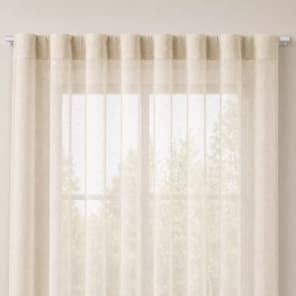
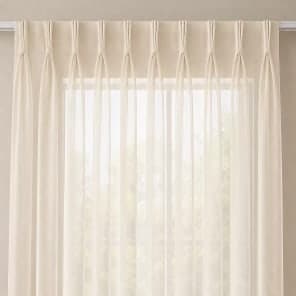
| Sheer Curtain Panels | Yes | Tension rod |
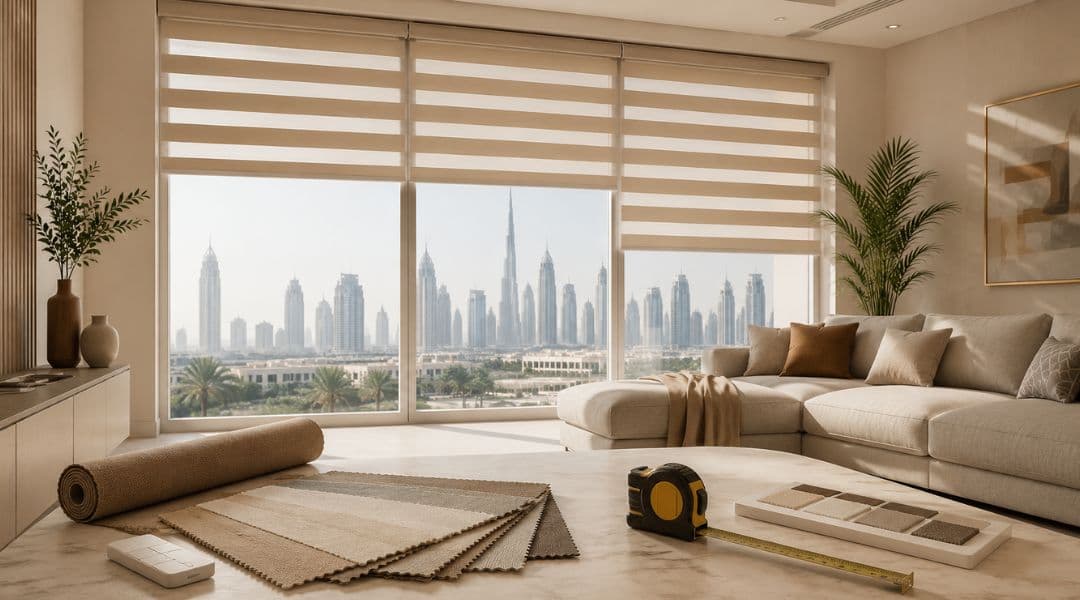
| Zebra Blinds | Limited | Adhesive brackets (light versions only) |
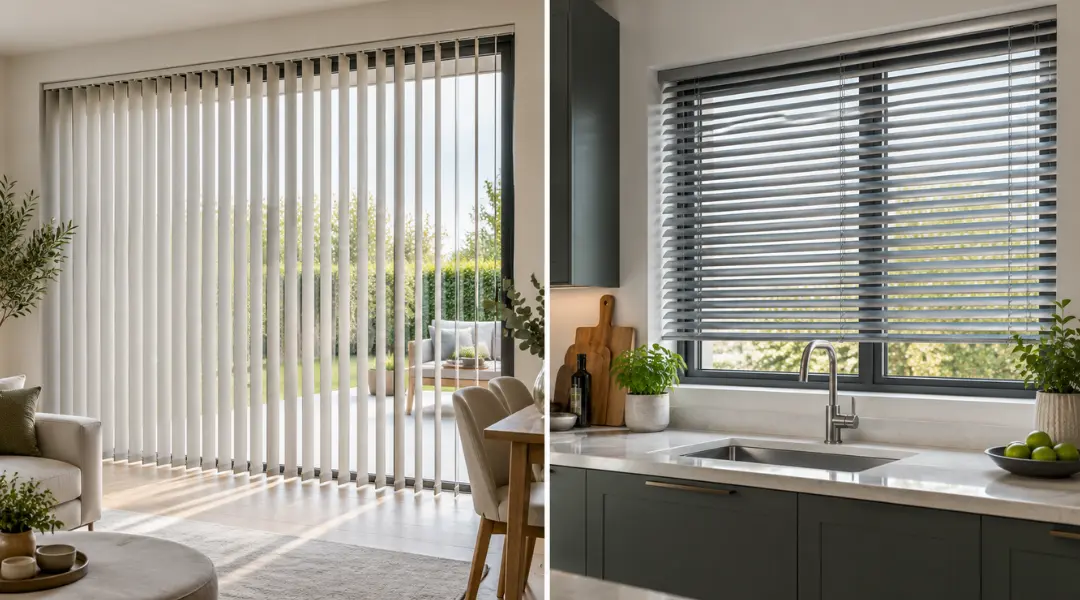
| Vertical Blinds | No | Requires drilled fixing |
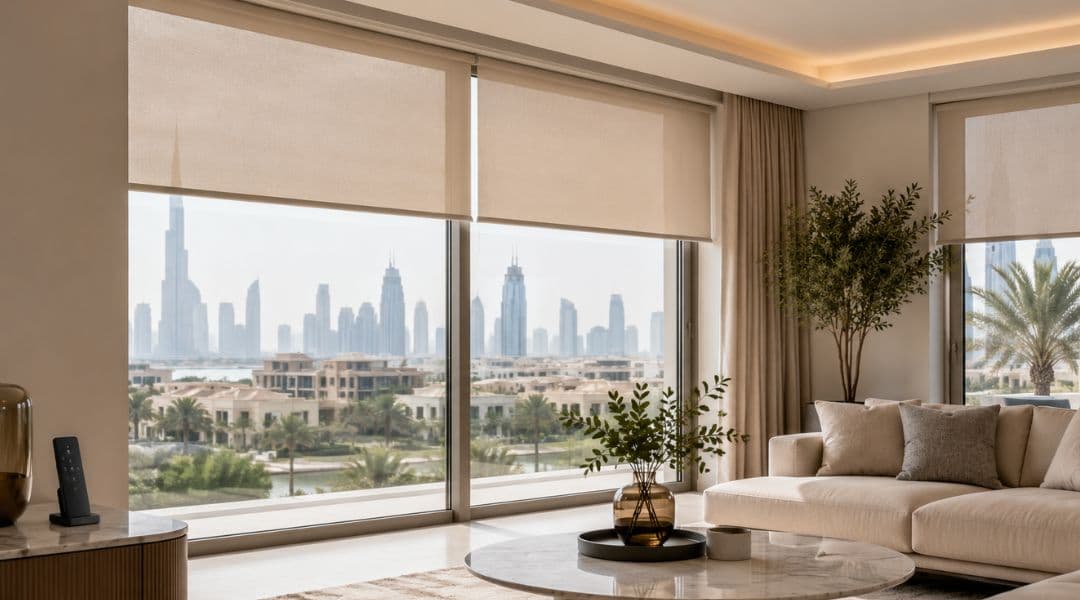
| Wide Roller Blinds | No | Requires drilled fixing |
| Blackout Roller Blinds | Limited | Adhesive only for smaller sizes |
| Roman Blinds | No | Requires drilled fixing |
The general rule is straightforward. The wider and heavier the blind, the less reliable any no-drill method becomes. A small adhesive-mounted roller blind on a bathroom window is a very different proposition from trying to mount a wide blackout blind on a bedroom window using the same method.
| Field Insight: We are often asked about no-drill options for roller blinds in Dubai apartments, particularly in bedrooms where blackout is needed. In most cases, a standard bedroom window with a blackout roller blind will exceed the reliable weight limit for adhesive brackets, particularly after a few months of daily use in UAE conditions, where temperature fluctuations affect adhesive performance. For bedrooms, we always recommend a properly fitted solution. The difference in longevity is significant. |
Step-by-Step — How to Install Adhesive Bracket Blinds

If adhesive bracket installation is the right method for your window and blind type, here is how to do it properly.
Step 1 — Measure the window accurately
Measure the width of the window frame or recess where the blind will sit. For an inside mount, measure the internal width of the recess at three points: top, middle, and bottom. Use the narrowest measurement to ensure the blind fits without forcing.
Step 2 — Clean the surface thoroughly
Wipe the bracket fixing surface with a dry cloth first to remove dust. Then clean with a mild alcohol-based solution and allow to dry completely. In a UAE home, this step matters more than in most countries because fine dust is constant, and adhesive will not bond well to a dusty surface.
Step 3 — Position the brackets
Mark the bracket positions lightly with a pencil before removing the adhesive backing. Both brackets must be level. Use a small spirit level or a level app on your phone. An uneven bracket position means an uneven blind, which cannot be corrected once the adhesive has cured.
Step 4 — Apply the brackets and allow to cure
Remove the adhesive backing and press each bracket firmly against the surface for 30 to 60 seconds. Most manufacturers recommend waiting 24 to 72 hours before attaching the blind. Do not rush this stage.
Step 5 — Attach the blind and test
Clip or slot the blind into the brackets according to the manufacturer's instructions. Gently raise and lower the blind several times to test the fit and the bracket hold. If anything feels unstable, remove the blind immediately and reassess the surface or bracket position before continuing.
Where No-Drill Installation Is Not the Right Answer

There are situations where no-drill methods should not be used, regardless of convenience.
Wide or heavy blinds: Any blind wider than approximately 100cm or heavier than the bracket's stated weight limit needs proper drilled fixing. Adhesive failure on a large blind is not just inconvenient; it can damage the blind, the frame, and anything on the windowsill below.
High-traffic commercial spaces: For commercial blinds in Dubai offices, meeting rooms, or reception areas, blinds are adjusted frequently throughout the working day. Adhesive brackets are not designed for this level of repeated use and will degrade faster than in a residential setting.
Direct UAE sun exposure: Adhesive strength is affected by temperature. A window facing west or south in a Dubai apartment or office can reach high surface temperatures through summer. This softens many adhesive compounds over time, reducing their hold. For any direct-sun window, drilled installation is the more reliable long-term choice.
Blackout requirements: Blackout blinds need to fit precisely to eliminate light gaps. No-drill methods rarely achieve the same precision of fit as a properly drilled and adjusted bracket installation. If light elimination is the goal, professional installation is always the better option.
Common Questions About No-Drill Blind Installation
Will adhesive brackets damage my window frame when removed?
Most quality adhesive brackets are designed to peel away cleanly from smooth surfaces without leaving residue or damage, provided they are removed carefully, and the surface is suitable in the first place. Pulling them off quickly or at the wrong angle can cause surface damage. Always follow the manufacturer's removal instructions.
Can tension rods hold roller blinds?
Tension rods are not strong enough for most roller blinds. They work well for lightweight sheer panels and café curtains. For roller blinds of any meaningful size, adhesive brackets or drilled fixing are the appropriate options.
Are no-drill blinds suitable for office blinds in Dubai?
For small, infrequently adjusted windows in a leased office space, yes. For main open-plan office windows, meeting rooms, or any window that is adjusted regularly throughout the working day, drilled professional installation is the more appropriate and more reliable choice.
How long do adhesive brackets last in UAE conditions?
This varies by brand, surface, and exposure. In a shaded internal window with no direct sun, quality adhesive brackets can hold reliably for one to two years or more. In a direct-sun position with significant temperature variation, performance degrades faster. Regular checks are advisable.
Would Professional Installation Be the Better Choice for You?
No-drill installation is a practical solution in the right circumstances. For renters, for temporary spaces, and for lighter blind types on smaller windows, it works well when done correctly.
For most UAE homes and offices, however, a professionally installed blind delivers better performance, a cleaner fit, and considerably longer service life. The installation cost is a one-time expense. Replacing a blind that has fallen from a failed adhesive bracket, or living with one that never quite sits level, costs more in the end.
At Blinds and Curtains, we offer a full range of blinds, curtains, and shutters for both residential and commercial properties across the UAE, including made-to-measure roller blinds, office blinds, and commercial blinds in Dubai fitted by our experienced installation team. Contact us or book a free appointment.
If you are not sure whether no-drill is the right approach for your window, our team will advise you honestly based on your frame type, blind choice, and how the window is used.
Visit our showroom or browse the full blinds collection at blindsandcurtains.ae to find the right option for your home or office.